Introduction.
In today’s digital world, people often use the terms Artificial Intelligence (AI), Machine Learning (ML), and Deep Learning (DL) interchangeably. You will hear them in conversations about technology, apps, automation, and innovation. However, while they are related, they are not the same.
Understanding the difference between these three concepts is important for anyone interested in technology. Whether you are a student, developer, or business owner, knowing how they work and what sets them apart can help you grasp the future of technology.
This guide will clearly explain the differences between AI, Machine Learning, and Deep Learning in a simple, beginner-friendly way.
What is Artificial Intelligence (AI)?
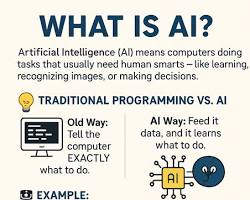
Artificial Intelligence is the broadest concept among the three. It refers to machines performing tasks that usually require human intelligence.
These tasks include:
- Learning
- Reasoning
- Problem-solving
- Understanding language
- Decision-making
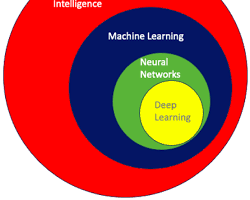
AI is like an umbrella that covers various technologies, including Machine Learning and Deep Learning.
Examples of AI in Real Life
- Virtual assistants like Siri
- Chatbots such as ChatGPT
- Recommendation systems on Netflix
- Fraud detection in banking systems
Types of AI
- Narrow AI (Weak AI) – Designed for specific tasks
- General AI (Strong AI) – Can perform any intellectual task (still theoretical)
- Super AI – Surpasses human intelligence (future concept)
What is Machine Learning (ML)?
Machine Learning is a subset of Artificial Intelligence. It focuses on enabling machines to learn from data without explicit programming.
Instead of writing fixed rules, developers provide data and let the machine find patterns and make decisions.
How Machine Learning Works
Machine Learning follows a simple process:
- Collect data
- Train a model
- Test the model
- Make predictions
- Supervised Learning – Learns from labeled data
- Unsupervised Learning – Finds patterns in unlabeled data
- Reinforcement Learning – Learns through rewards and penalties
Real-World Examples
- Email spam filters
- Product recommendations on Amazon
- Voice recognition systems
- Predictive text on smartphones
What is Deep Learning (DL)?
Deep Learning is a specialized subset of Machine Learning that uses neural networks inspired by the human brain.
It is designed to handle large amounts of data and perform complex tasks like image and speech recognition.
Key Features of Deep Learning
- Uses artificial neural networks
- Requires large datasets
- Automatically extracts features from data
- Delivers high accuracy in complex tasks
Examples of Deep Learning
- Facial recognition systems
- Self-driving cars
- Voice assistants
- Image classification tools
Relationship Between AI, Machine Learning, and Deep Learning
To understand the relationship, think of it like this:
AI is the main concept.
Machine Learning is a subset of AI.
Deep Learning is a subset of Machine Learning.
In simple terms:
AI → Machine Learning → Deep Learning
This means all Deep Learning is Machine Learning, and all Machine Learning is AI, but not all AI is Machine Learning.
Key Differences Between AI, ML, and DL
- Scope
AI is the broadest concept.
Machine Learning is a subset of AI.
Deep Learning is a subset of Machine Learning. - Functionality
AI aims to simulate human intelligence.
ML focuses on learning from data.
DL focuses on learning using neural networks. - Data Requirements
AI can work with less data.
ML requires moderate data.
DL requires large amounts of data. - Complexity
AI systems can be simple or complex.
ML models are more complex than basic AI.
DL models are highly complex. - Human Intervention
AI may require manual programming.
ML requires less human intervention.
DL requires minimal human intervention. - Performance
AI provides general solutions.
ML improves accuracy over time.
DL delivers high accuracy for complex problems.
Comparison Table
| Feature | AI | Machine Learning | Deep Learning |
|---|---|---|---|
| Definition | Broad concept | Subset of AI | Subset of ML |
| Goal | Mimic human intelligence | Learn from data | Learn using neural networks |
| Data Requirement | Low to moderate | Moderate | High |
| Complexity | Medium | High | Very high |
| Human Involvement | High | Medium | Low |
| Examples | Chatbots, automation | Recommendations, spam filters | Self-driving cars, vision AI |
How They Work Together
AI, Machine Learning, and Deep Learning often work together in real-world systems.
For example:
- AI defines the goal, like recognizing faces.
- Machine Learning processes the data.
- Deep Learning handles complex recognition tasks.
This combination allows modern systems to achieve high performance and accuracy.
Applications in Real Life
Healthcare
AI helps diagnose diseases.
ML predicts patient outcomes.
DL analyzes medical images.
Finance
AI detects fraud.
ML predicts market trends.
DL analyzes complex financial data.
Transportation
AI manages traffic systems.
ML predicts routes.
DL powers self-driving cars.
Entertainment
AI personalizes recommendations.
ML analyzes user behavior.
DL improves content recognition.
Advantages of AI, ML, and DL
Automation
These technologies automate repetitive tasks and improve efficiency.
Accuracy
They reduce errors and enhance decision-making.
Personalization
They create tailored experiences for users.
Scalability
They can handle large amounts of data and users.
Challenges and Limitations
Data Dependency
ML and DL require large amounts of data to perform well.
High Costs
Developing and maintaining these systems can be expensive.
Lack of Transparency
Deep Learning models are often seen as “black boxes.”
Ethical Concerns
Issues like bias and privacy need to be addressed.
When to Use AI vs ML vs DL
Use AI When:
- You need rule-based automation.
- The problem is simple.
Use Machine Learning When:
- You have structured data.
- You need predictions or pattern recognition.
Use Deep Learning When:
- You have large datasets.
- You need high accuracy.
- The problem is complex, like image or speech recognition.
Future of AI, ML, and DL
The future of these technologies is very promising.
Increased Automation
More industries will adopt AI-driven automation.
Better Decision-Making
AI systems will become more accurate and reliable.
Human-AI Collaboration
Humans and AI will work together more closely.
Advanced Innovations
Breakthroughs in Deep Learning will lead to smarter systems.
Common Misconceptions
AI, ML, and DL Are the Same
They are related but not identical.
AI Will Replace Humans Completely
AI is more likely to assist humans rather than replace them.
Deep Learning Works Without Data
Deep Learning requires large datasets to function effectively.
How to Start Learning These Technologies
Learn the Basics
Start with fundamental concepts in AI.
Learn Programming
Python is widely used in AI and ML.
Explore Tools
Try frameworks like:
- TensorFlow
- PyTorch
Practice Projects
Work on real-world projects to gain experience.
Conclusion
Artificial Intelligence, Machine Learning, and Deep Learning are three closely related but distinct technologies shaping the future of the world.
AI is the broad concept of intelligent machines.
Machine Learning enables systems to learn from data.
Deep Learning uses neural networks for complex tasks.
Understanding their differences helps you appreciate how modern technology works and affects your daily life.
As these technologies evolve, they will play an even bigger role in transforming industries, improving efficiency, and creating new opportunities.