A Complete Beginner’s Guide:
Introduction.
Artificial Intelligence (AIhttps://www.fairtrials.org/campaigns/ai-algorithms-data/?gad_source=1&gad_campaignid=181868047&gbraid=0AAAAADl1Tdns6tb5YMx9BWERfmdY9QFMc&gclid=Cj0KCQjw4a3OBhCHARIsAChaqJO0PqeVJvk8M7AiYC_ck3QfaZeF_PHWi0m9y-pc5KTST3oKT7TSyj4aAjEfEALw_wcB) is an exciting and rapidly growing field in modern technology. From voice assistants on smartphones to advanced medical systems, AI is changing how we live, work, and interact. But what is Artificial Intelligence, and why does it matter?
Simply put, Artificial Intelligence is the ability of machines to imitate human intelligence. This includes learning, thinking, making decisions, and solving problems. While it may sound futuristic, AI is already part of our everyday lives in ways many people don’t even recognize.
This guide will explain AI clearly and in a beginner-friendly way. It will cover how it works, the types of AI, real-world applications, benefits, challenges, and its future.
What is Artificial Intelligence?
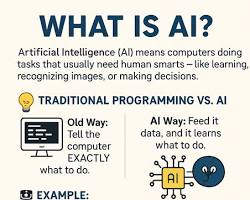
Artificial Intelligence is a branch of Computer Science focused on creating systems that can perform tasks usually requiring human intelligence.
These tasks include:
- Understanding language
- Recognizing images
- Solving problems
- Learning from experience
- Making decisions
Unlike traditional software, which follows fixed instructions, AI systems can improve over time.
For instance, when you use a recommendation system on platforms like YouTube or Netflix, AI analyzes your behavior and suggests content you might enjoy.
A Brief History of AI
Artificial Intelligence is not a new idea. It has been developing for decades.
1950s: The concept of thinking machines started. Alan Turing introduced the idea of machines imitating human intelligence.
1960s-1970s: Early AI programs were created, but progress was slow due to limited computing power.
1980s: AI gained attention with expert systems used in businesses.
2000s: The internet and data growth improved AI capabilities.
Today: AI powers advanced tools like ChatGPT and self-driving technologies.
Types of Artificial Intelligence
AI can be classified into different types based on its abilities.
- Narrow AI (Weak AI)
This is the most common type of AI today. It is designed for specific tasks.
Examples:
- Voice assistants
- Recommendation systems
- Image recognition
These systems are efficient but cannot perform tasks outside their programming.
- General AI (Strong AI)
General AI refers to machines that can handle any intellectual task that a human can do. This type of AI does not yet exist but is a major goal for researchers.
- Superintelligent AI
This is a theoretical idea where AI exceeds human intelligence in all areas, including creativity and decision-making. It remains a topic of discussion and research.
Key Concepts in AI
To better understand AI, it’s important to know some key concepts.
Machine Learning and artificial inteligence
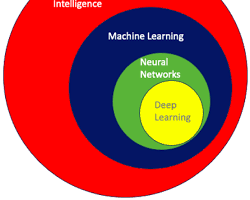
Machine Learning is a subset of AI that allows machines to learn from data without explicit programming.
For example, a machine learning model can analyze thousands of images to learn how to recognize faces.
Deep Learning
Deep learning is a more advanced form of machine learning that uses neural networks modeled after the human brain.
It is used in:
- Speech recognition
- Image processing
- Self-driving cars
Natural Language Processing (NLP)
NLP enables machines to understand and respond to human language. Tools like chatbots and virtual assistants depend heavily on this technology.
Computer Vision
Computer vision allows machines to interpret and analyze visual data, such as images and videos.
How Does AI Work?
AI systems operate using a mix of data, algorithms, and computing power.
- Data Collection
AI systems need large amounts of data to learn. This data can include text, images, videos, or numbers.
- Training the Model
The system is trained with algorithms that identify patterns in the data. For example, a model trained on pictures of cats learns which features define a cat.
- Making Predictions
Once trained, the AI system can make decisions or predictions based on new data.
- Continuous Learning
AI systems improve as they process more data and refine their models.
Real-World Applications of AI
AI is used in many industries and everyday tools.
Healthcare
AI assists doctors in diagnosing diseases, analyzing medical images, and developing treatment plans.
Education
AI-powered platforms personalize learning experiences for students based on their performance.
Business
Companies use AI for:
- Customer support
- Data analysis
- Marketing automation
Transportation
AI plays a key role in self-driving vehicles and traffic management systems.
Entertainment
Streaming services like Spotify use AI to recommend music based on user preferences.
Advantages of Artificial Intelligence
AI provides many benefits that make it valuable across various industries.
- Automation
AI can handle repetitive tasks efficiently, saving time and effort.
- Accuracy
AI systems reduce human errors, especially in data-heavy tasks.
- Availability
Unlike humans, AI systems can work 24/7 without breaks.
- Faster Decision-Making
AI can quickly process large amounts of data and make informed decisions.
Challenges and Risks of AI
Despite its benefits, AI also has challenges.
- Job Displacement
Automation may replace certain jobs, especially repetitive roles.
- Bias and Fairness
AI systems can inherit biases from their training data.
- Privacy Concerns
AI often relies on large amounts of personal data, raising privacy issues.
- High Costs
Developing and maintaining AI systems can be costly.
Ethical Considerations in AI
As AI grows more powerful, ethical concerns become more significant.
Key issues include:
- Transparency in decision-making
- Accountability for AI actions
- Preventing the misuse of AI technology
Organizations like OpenAI are working to ensure AI is developed responsibly.
The Future of Artificial Intelligence
The future of AI is full of possibilities.
Smarter Assistants
AI assistants will become more intelligent and human-like.
AI in Everyday Life
AI will continue to integrate into homes, workplaces, and cities.
Advanced Healthcare
AI could help cure diseases and enhance global healthcare systems.
Human-AI Collaboration
Instead of replacing humans, AI will likely work alongside us to improve productivity.
How to Get Started with AI
If you want to learn about AI, here are some steps to begin:
Learn the Basics
Start with fundamental concepts in math and programming.
Learn Programming
Languages like Python are widely used in AI development.
Explore Tools
Try frameworks like:
- TensorFlow
- PyTorch
Build Projects
Practice by creating simple AI applications.
Conclusion.
Artificial Intelligence is changing the world at an incredible rate. From simple automation to advanced problem-solving, AI is becoming a key part of modern life.
Understanding AI is essential for anyone wishing to stay relevant in today’s technology-driven world. Whether you are a student, professional, or business owner, learning about AI can create countless opportunities.
As technology continues to advance, one thing is clear: Artificial Intelligence is not just the future—it is the present.